Thai Etiquette: 20 Do’s & Don’ts Every Foreigner Should Know (2025 Guide)
Table of Contents
Thailand is one of the world’s most welcoming countries, renowned for its hospitality and the warmth of its people. However, like any country, it has its own unique set of cultural customs and social norms. A gesture that feels normal in your home country might be seen as disrespectful here.
Learning the basics of Thai etiquette isn’t about memorizing strict rules; it’s about showing respect. This will help you avoid awkward situations, build genuine connections with locals, and gain a deeper appreciation for Thai culture. This guide covers the essential do’s and don’ts every visitor or individual planning to move to Thailand should know.
1. Greetings & Showing Respect
✅ Do: Use the Wai (ไหว้) for Greetings
The wai, pressing your palms together in a prayer-like gesture, is the traditional and most common greeting. As a foreigner, you are not always expected to initiate it, but returning a wai is a sign of respect.
How to Wai: The younger person or person of lower status always wais first. The height of your hands indicates the level of respect.
For equals/peers: Hands at chest level.
For elders/superiors: Hands at chin or nose level.
For monks/royalty: Hands at forehead level (foreigners are not expected to do this).
❌ Don’t: Wai Children or Service Staff
Thais do not wai people younger than them or people in service roles (like waiters or hotel staff), who will typically offer you a wai first. A smile and a nod in return is perfectly acceptable in these situations.
✅ Do: Use Polite Particles: krub and ka
Ending your sentences with a polite particle is the single easiest way to sound more respectful.
Men say: ครับ (krub / krap)
Women say: ค่ะ (ka)
For example, “Sawadee krub” (Hello, spoken by a man) or “Khop khun ka” (Thank you, spoken by a woman).
2. Respect for the “Three Pillars”: Nation, Religion, Monarchy
✅ Do: Show Deep Respect for the Royal Family
The monarchy is revered in Thailand. You will see portraits of the King and Royal Family everywhere. Stand up respectfully when the King’s Anthem is played (e.g., before a movie in a cinema).
❌ Don’t: EVER Criticize the Monarchy
This is the most important rule. Thailand has extremely strict lèse-majesté laws. Any perceived insult or criticism of the Royal Family can lead to severe legal consequences, including long prison sentences. Avoid this topic entirely.
✅ Do: Dress Modestly in Temples
When visiting temples (wats), you must cover your shoulders and knees. This applies to everyone. Most major temples, like the Grand Palace, offer sarongs for rent if your attire is not appropriate.
❌ Don’t: Point Your Feet at People or Religious Icons
In Thai culture, the head is the most sacred part of the body, and the feet are the lowest and dirtiest. Never point your feet at anyone, and especially not at a monk or an image of the Buddha. When sitting on the floor in a temple, tuck your feet behind you.
3. Social & Personal Conduct
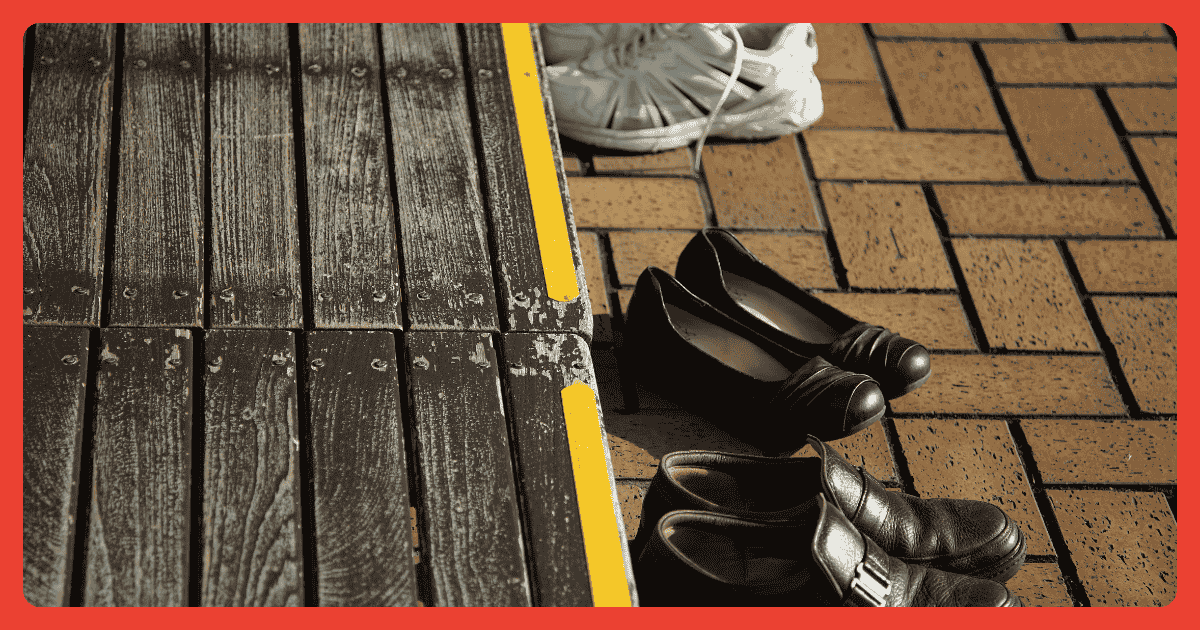
✅ Do: Remove Your Shoes
Always remove your shoes before entering someone’s home. You should also do so when entering many temples, shops, and even some restaurants. If you see a pile of shoes at the entrance, that’s your cue.
❌ Don’t: Touch Anyone’s Head
As the most sacred part of the body, touching someone’s head, even a child’s, is considered highly offensive. Avoid this, even as a playful gesture.
✅ Do: Keep a “Cool Heart” (Jai Yen Yen)
Thais value emotional control and avoiding confrontation. Raising your voice, getting angry, or showing frustration in public causes a “loss of face” for everyone involved. The best approach to any problem is to stay calm, smile, and be patient. This is known as being ใจเย็นๆ (jai yen yen), or having a “cool heart.”
❌ Don’t: Point with Your Finger
Pointing directly at a person with your index finger is considered rude. To indicate someone, use a gentle, open-handed gesture with your palm down.
✅ Do: Use Your Right Hand to Pass Things
The left hand is traditionally considered unclean. While not a strict rule for foreigners, it is more polite to pass objects, especially money, to someone with your right hand. For important items or when giving something to an elder, using both hands is a sign of high respect.
❌ Don’t: Engage in Overt Public Displays of Affection
Thai culture is generally conservative in public. Holding hands is common and acceptable, but overt displays like passionate kissing are considered inappropriate.
4. Dining Etiquette
✅ Do: Use a Spoon and Fork Correctly
The standard utensils for a Thai meal are a spoon in your right hand and a fork in your left. The spoon is the primary utensil for bringing food to your mouth. The fork is used only to push food onto the spoon. Chopsticks are typically only used for noodle dishes.
❌ Don’t: Stick Chopsticks Upright in a Bowl of Rice
This resembles the incense sticks burned at funerals and is considered a symbol of death. Always place them on a chopstick rest or beside your bowl.
✅ Do: Share Food “Family Style”
Most Thai meals are served “family style,” with multiple dishes shared by everyone. The proper etiquette is to take only a small amount (1-2 spoonfuls) of a single dish at a time, place it on your own plate of rice, and eat that before taking more. Don’t pile your plate high with food from all the dishes at once.
Frequently Asked Questions (FAQs)
What if I accidentally forget a rule and cause offense?
Thais are incredibly gracious and forgiving, especially with foreigners. They know you are learning. If you make a mistake, a sincere smile and a polite “Khor thot krub/ka” (sorry) will almost always smooth things over instantly.
Should I wai everyone?
Not necessarily. As a general rule for a foreigner, if someone wais you, you should always wai back. If you are being introduced to someone’s parents or a respected elder, initiating a wai is a wonderful gesture that will be deeply appreciated.
Is it okay to bargain everywhere?
No. Bargaining is expected at open-air markets and with tuk-tuk drivers (agree on the price beforehand!). It is not acceptable in department stores, convenience stores, pharmacies, or restaurants that have fixed, menu prices.
Is tipping expected in Thailand?
Tipping is not a traditional custom but is becoming more common and is always appreciated. For street food, no tip is expected. In restaurants, rounding up the bill or leaving a 20-50 THB tip for great service is a nice gesture. In high-end places, check if a 10% service charge has already been added.
Conclusion: The Most Important Rule
Thai etiquette is deeply rooted in the concepts of respect, humility, and maintaining social harmony. While this list may seem long, it all comes down to being mindful and considerate.
More important than any single rule is your attitude. A kind heart (ใจดี – jai dee), a patient demeanor, and a genuine smile are the most valuable tools you can have. They will overcome almost any cultural misstep and help you connect with the wonderful people of Thailand.
Sawadee Living Team
The Sawadee Living Team shares practical guides and insights on expat life, culture, and travel in Thailand. Created by the team behind Sawadee Translations, we combine first-hand experience with professional expertise to help you thrive in Thailand.